OMNI PARIS
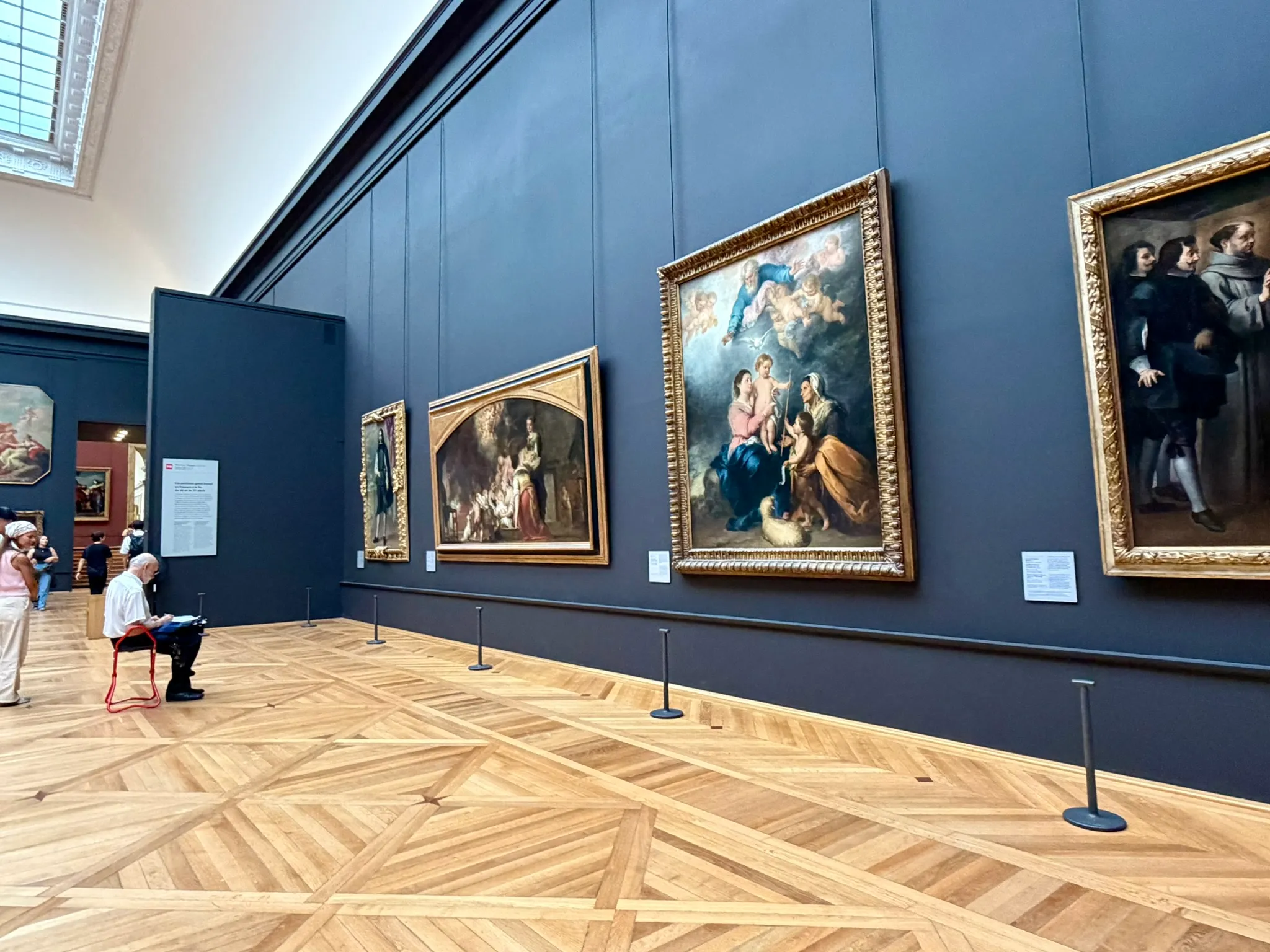
Louvre Masterclass XI : Spanish Painting at the Louvre
This eleventh Louvre Masterclass explores Spanish painting from the sixteenth to the nineteenth century through works by El Greco, Ribera, Murillo, Zurbarán, Goya and their contemporaries. Although the Louvre’s Spanish paintings do not enjoy quite the same renown as its Italian or Flemish collections, they are exceptionally rewarding. With the notable exception of Velázquez, the leading figures of the Spanish school are represented, often by masterpieces such as Ribera’s The Clubfooted Boy or Murillo’s The Young Beggar. The collection also has a remarkable history, notably the opening in 1838 of Louis-Philippe’s Spanish Gallery, which brought together nearly 500 paintings but remained at the Louvre for only about a decade.
DATE & TIME
7 April 2027 at 17:45
MEETING POINT
Outside the group reception area, under the Louvre glass pyramid
DURATION
2 hours 30 minutes
LANGUAGE
French
THE PROGRAMME
This eleventh Louvre Masterclass explores Spanish painting from the sixteenth to the nineteenth century through works by El Greco, Ribera, Murillo, Zurbarán, Goya and their contemporaries.
Although the Louvre’s Spanish paintings do not enjoy quite the same renown as its Italian or Flemish collections, they are exceptionally rewarding. With the notable exception of Velázquez, the leading figures of the Spanish school are represented, often by masterpieces such as Ribera’s The Clubfooted Boy or Murillo’s The Young Beggar. The collection also has a remarkable history, notably the opening in 1838 of Louis-Philippe’s Spanish Gallery, which brought together nearly 500 paintings but remained at the Louvre for only about a decade.
The masterclass will begin with El Greco, regarded as a precursor of modern Spanish painting. Drawing on Byzantine culture and the Venetian Renaissance, his style was long considered extravagant because of its shimmering colours and elongated figures. Yet these qualities were closely aligned with the Spanish Church’s desire for art capable of moving the faithful.
Religious painting of the Spanish Golden Age will then be explored through Herrera, Valdés Leal, Murillo and Zurbarán, with attention to the diversity of styles, the complexity of iconography and the decisive role of royal and religious institutions as patrons.
Another major focus will be portraiture which, from Ribera to Goya, became one of the most fertile and distinctive genres of Spanish painting. Its social and political dimensions will also be considered.
Through close visual analysis and discussion, the session will offer practical ways to introduce different audiences to Spanish painting, a tradition too often overlooked by visitors to the Louvre.
YOUR VISIT
Practical information
Duration: 2 hours 30 minutes
Location: Louvre Museum — galleries or rooms specified in each masterclass programme
Language: French
Maximum group size: 20 participants
Audio headsets: Provided
Intended audience: Licensed tourist guides, cultural mediators and heritage professionals
Museum admission is not included. Participants must hold a valid form of admission to the Louvre, such as an admission ticket, a Friends of the Louvre membership card, a professional guide-conférencier card, or any other valid credential granting access to the museum’s collections.
YOUR ART HISTORIAN
Meet your expert
Guillaume Peigné is an art historian and lecturer specialising in Western art from the Renaissance to the Second World War. He holds a PhD in Art History, with doctoral research on nineteenth-century French sculpture. He has taught at the Sorbonne (Paris IV), the École du Louvre and Drouot Formation, where he continues to teach. His approach combines close visual analysis with historical context. At OMNI PARIS, he leads specialist museum masterclasses and professional training sessions.

JOIN THE MASTERCLASS
Reserve your place
Take a closer look at art and history with an expert-led OMNI PARIS masterclass.
Book this masterclassFor programme enquiries, contact us.